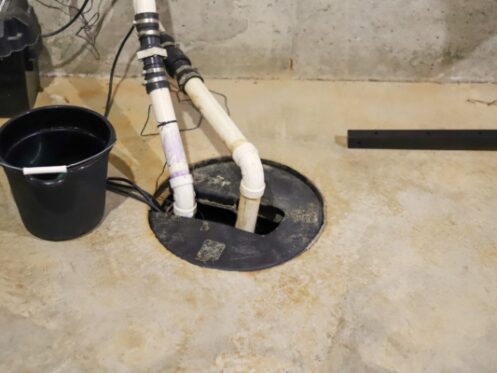
Homeowners with basements often have to worry about flooding. Even in areas that don’t receive frequent rainfall, basement flooding can still occur due to groundwater intrusion, heavy storms, or seasonal snowmelt. Whether flooding is caused by a sudden spring thaw or a heavy Wisconsin downpour, the result can be standing water that leads to costly structural damage and mold growth. If your current sump pump struggles to keep up or has failed during severe weather, it may be time to consider a modern replacement. At Southport Home Services, we help homeowners in Wausau, WI, choose reliable sump pump systems designed to keep basements dry and protected.
The term “sump pump” actually refers to a broad category of systems. While they all serve the same purpose, different designs offer different benefits. Many homeowners start with a basic sump pump and later realize they need additional protection or a more capable system. Choosing the right replacement involves more than picking a pump off the shelf. Factors such as the volume of water entering your basement, the size of your sump pit, discharge height, and the need for backup power all play a role. Below are five effective sump pump replacement and upgrade options to help protect your home from flooding.
1. Submersible Sump Pumps
Submersible sump pumps are the most common choice for modern basement protection. These units are designed to sit entirely inside the sump pit, with both the pump and motor submerged in water. This design offers several advantages, especially for homes where the basement is finished or used as living space.
Because the motor operates underwater, submersible pumps are significantly quieter than pedestal models. The surrounding water also helps keep the motor cool, allowing for more efficient operation during heavy use. Many submersible pumps offer higher pumping capacity than pedestal models, and some are designed to handle small debris depending on the impeller type. For basements with a higher risk of flooding, a quality submersible pump is often a strong choice.
2. Pedestal Sump Pumps
Pedestal sump pumps are commonly found in older homes and feature a motor mounted above the sump pit on a vertical shaft. Only the impeller sits inside the water, while the motor remains dry and easily accessible. This design makes pedestal pumps easier to inspect and service.
Because the motor stays out of the water, pedestal pumps are often easier to maintain and can have a longer service life when properly cared for. They are also slim and work well in smaller sump pits. However, pedestal pumps tend to be louder and typically provide less pumping power than submersible options.
3. Battery Backup Sump Pumps
Battery backup sump pumps are add-on systems designed to operate when the primary pump loses power or fails. During severe storms, power outages are common, which can leave even a properly functioning sump pump unable to operate.
Battery backup systems are specifically engineered for sump pump use and include a deep-cycle battery, charger, and separate float switch. When the primary pump cannot operate, the backup activates automatically. This added layer of protection can help prevent basement flooding during power outages or equipment failure.
4. Water-Powered Backup Pumps
Water-powered sump pumps provide another backup option for homes connected to a municipal water supply. These systems use water pressure from the home’s plumbing to create suction that removes water from the sump pit.
While water-powered pumps do not rely on electricity or batteries, they do contain internal valves and moving components. Their performance depends on available water pressure and flow, which limits how quickly they can remove water. They are best used as emergency backup systems rather than primary pumps.
5. Combination Sump Pump Systems
Combination sump pump systems offer comprehensive protection by pairing a primary submersible pump with a battery backup pump in a single, integrated setup. These systems are designed to fit standard sump pits and provide automatic backup protection without requiring separate installations.
Combination systems act as a built-in failsafe, ensuring that water continues to be removed even during power outages. For homes with high water tables or a history of flooding, upgrading to a combination system is often considered the most reliable long-term solution.
Choosing the Right Capacity and Horsepower
Selecting the correct pump size and horsepower is essential for effective flood prevention. Most residential sump pumps range from ⅓ to 1 horsepower. Homes with higher water volumes, deeper sump pits, or greater vertical lift may require pumps toward the upper end of that range.
A pump that is too weak may not keep up with incoming water, while an oversized pump can short-cycle, turning on and off too frequently. Short-cycling increases wear on the motor and can shorten the lifespan of the pump. Choosing a properly sized system ensures reliable performance and long-term durability. Our team at Southport Home Services can assess your home’s specific needs and recommend the appropriate capacity.
Expert Sump Pump Services in Wausau, WI
At Southport Home Services, we have built a strong reputation for helping homeowners select, install, and maintain reliable sump pump systems. We serve Wausau and surrounding areas with a full range of plumbing services, including sump pump replacement, drain cleaning, fixture installation, sewer line repairs, and water heater services. Whether you are responding to an emergency or planning a proactive upgrade, our team provides prompt and professional service.
For sump pump add-ons or replacement options, contact Southport Home Services today to protect your basement from future flooding.