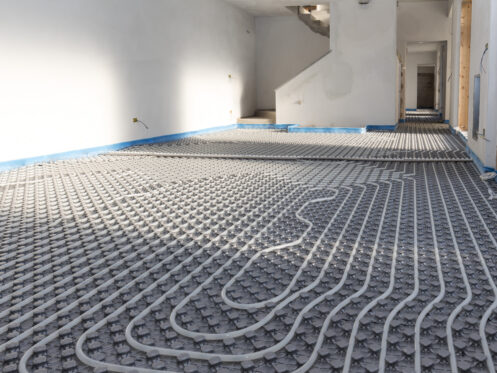
Among the most effective and efficient ways to heat a home during the cold months, radiant floor heating often stands out as the best. If you are currently building or renovating your property, consider integrating this system early in the design phase.
Radiant Floor Heating for Homes
Radiant heat is simply heat that travels from a warm surface to the surrounding space. The heat from the sun, the glow of a fireplace, and the warmth of a cooktop are all everyday examples of radiant heat in action. A radiant floor heating system works on the same principle. The floor itself becomes the heated surface, gently releasing warmth upward into the living area where it is located.
Types of Radiant Floor Heating Systems
There are different types of radiant floor heating systems. Different designs can impact how these systems work. Each delivers heat differently and comes with its own advantages.
Hydronic Radiant Heating
This is the most common and often recommended type of radiant heating to install in a home. It uses a boiler or water heater to warm water, which is then circulated through a network of tubing installed beneath the floor. As the heated water moves through the loops, the floor surface warms and gently radiates heat into the living space.
Hydronic radiant heating systems that run on natural gas are especially well‑suited for new builds because of their reliability, efficiency, and long‑term operating savings. Water is an excellent heat‑transfer medium. It retains heat longer than air, allowing the system to maintain comfortable temperatures without cycling as frequently as forced-air units, such as furnaces or heat pumps.
These systems are also known for their durability. They tend to experience less mechanical wear and are not affected by many of the common issues that impact forced‑air heating equipment.
Electric Radiant Heating
Electric radiant systems use heating coils or mats installed beneath the flooring. They use the same working principle as electric kettles or space heaters. When electricity flows through the coils, electrical resistance generates heat. The coils are often made from nichrome. This is an alloy of nickel and chromium with a naturally “rough” internal structure that impedes the flow of electrons. In simple terms, when energized, the electrons scatter frequently as they move through the material, and those collisions produce heat.
As the coils warm, the heat transfers to the floor surface and then rises evenly through the room. Because these systems don’t require pumps, piping, or boilers, installation is straightforward and typically more affordable upfront. They are perfect for small rooms in areas where electricity costs are relatively cheaper.
Note, however, that electric systems are not often the go-to option for many homeowners. They strictly depend on electricity as their fuel source, and since winter demands continuous heating, the operational costs can be unbearable.
Your Cost Expectations
Installing radiant heating during an ongoing build or renovation is ideal. This reduces the need to tear up existing flooring and avoids the labor‑intensive process of retrofitting tubing or heating mats beneath finished surfaces. Your installer will only need to integrate the system directly into the subfloor or slab, which keeps labor costs lower and ensures optimal performance.
Your installation costs will be affected by:
The Size of Your Home
The size and layout of your home influence the amount of material required and the time it takes to complete the installation. Larger homes naturally require more tubing, coils, or mats, along with additional labor hours. However, the cost per square foot often decreases slightly as the project size increases. Materials can be purchased in bulk, and installation becomes more efficient across larger, open areas.
The Type of System You Choose
Hydronic systems typically cost more upfront due to the need for boilers, pumps, and piping. Electric systems are generally more affordable to install because they only include heating mats or cables and do not require mechanical components.
Choosing Your Flooring Material
Floors conduct heat at different rates. For the best performance, you will want flooring materials that transfer heat easily. Tile, stone, and polished concrete are ideal because they conduct heat well, allowing the system to operate at peak efficiency. Carpet, thick hardwood, and certain engineered floors can insulate the heat instead of letting it pass through. They often require additional system adjustments, which can increase installation costs.
System Quality
Even within the same category, radiant floor heating systems aren’t all built to the same standard. They differ in efficiency, durability, heat output, and overall construction quality. Higher‑end systems often use better tubing materials, more advanced controls, and improved insulation layers, which naturally cost more. However, they offer enhanced performance and significantly reduce long‑term operating costs.
Lower‑quality systems may cost less upfront but can wear out faster, deliver uneven heating, or require more frequent maintenance. If you qualify for financing, choosing the highest‑quality system you can reasonably afford is usually the smarter long‑term investment.
Labor Expertise
Radiant floor heating requires precise layout, proper spacing, correct insulation, and careful integration with other home systems. An experienced installer is most likely to deliver a system that performs efficiently and lasts for decades.
Poor installation can lead to cold spots, slow heat‑up times, reduced efficiency, or even system failure. Fixing these issues later is often far more expensive than paying for a qualified professional from the start.
Maintenance and Other Operational Costs
After installation, your radiant floor system will need at least one professional maintenance visit per year. This ensures that the components are operating correctly, the system is free of leaks or blockages, and the heat output remains consistent throughout your home. Regular maintenance also helps protect your warranty.
As a homeowner, there isn’t much else you can do regarding radiant heating maintenance that will cost you money, unlike forced-air systems. Your care will include watching out for signs of failure, keeping the floor surface clear, and monitoring energy bills.
Breakdowns are rare because radiant floor heating systems don’t have many moving parts. However, when issues do occur, they are usually related to components such as pumps, valves, thermostats, or electrical connections rather than the tubing or heating mats themselves. Modern tubing is designed to last for decades; in many cases, 50 to 100 years. Once embedded and pressure-tested, they rarely need attention.
Contact Southport Home Services for More Information
Reach out to our team at Southport Home Services while building or remodeling your home to have a radiant floor heating system professionally installed. Our NATE-certified technicians will deliver reliable, high‑quality installations tailored to your home layout and heating needs. We have over 20 years of proven track record in HVAC services, with an A+ rating on the Better Business Bureau website. We also offer flexible financing options to qualifying homeowners, making it easier to invest in long‑term comfort and efficiency. Call us at Southport Home Services for expert radiant floor heating installation in the Madison, WI area.