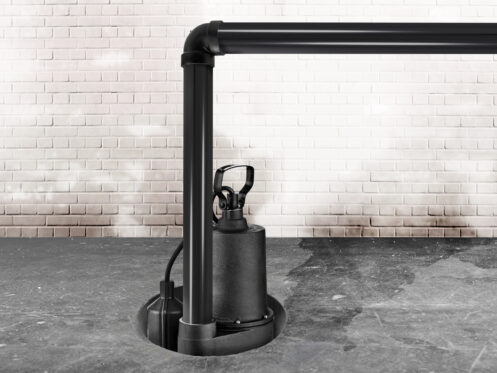
When winter weather arrives in Madison, WI, your sump pump often works overtime to keep your basement or crawl space from flooding. If the discharge line freezes, you can experience a devastating backup. This guide from Southport Home Services includes information to help extend the life of your pump, protect your discharge line, and protect your home.
Understanding Discharge-Line Freezing
The discharge line on your sump pump unit is a pipe or hose that carries water from your pump to the outdoors and directs it away from your home. Typically, the discharge endpoint is a storm drain or a yard that slopes away from the home’s foundation. Because your sump’s discharge line usually exits the house through a basement wall, it is exposed to freezing temperatures. If water freezes inside your discharge line, outgoing water may not drain properly, and in some cases, a full blockage can occur. It can be expensive to address a frozen discharge line. This is especially true if the problem has caused water to back up and damage the basement or foundation.
Inspecting and Preparing Prior to Winter
Before temperatures plummet, inspect your sump pump system and discharge line. Make sure the pump runs when the pit fills up. Watch the discharge flow outside to see if there are any leaks or slow drainage. Assess your sump pit. If the pit is in an unheated area and the temperature falls below 32 degrees Fahrenheit, the water in the pit can freeze. If that’s the case, you’ll need to take steps to insulate this area. Dealing with these issues now is much simpler than waiting for a backup to occur.
Have a professional inspect your pump to determine whether couplings, valves, or fittings need tightening or replacement. It’s also essential to ensure that your discharge line hasn’t shifted over time.
Adding Insulation for Freeze Protection
There are different types of insulation that can be used on your sump pump discharge line to prevent freezing. Foam sleeves can be cut and easily slid over exposed sections of the hose or pipe. Don’t skip insulating connections and any pipes that extend out near your foundation wall. All exposed seams and joints should be properly sealed with waterproof tape that is weather-resistant.
Ensuring your discharge line is buried correctly can provide natural insulation. The hose or pipe should be several inches underground, below the frost line, to prevent freezing. Modifications may be necessary if the initial installation wasn’t correct or if ground settling has impacted its placement.
Make sure that the end of your discharge line isn’t blocked by anything. This includes clearing away any ice can cause a backup. If necessary, a professional can install a riser above ground level to reduce clogging.
Heat Tape and Other Products
It may be necessary to heat the area around your sump pit and discharge line to prevent freezing. UL-listed heat tape can be wrapped on the exterior of the discharge pipe and used during the winter months.
If you have short segments of discharge line that extend near your foundation, a heat-controlled box can protect various valves and fittings. Be sure to monitor this device to ensure the proper temperature is being achieved and the area isn’t overheating. A weatherproof outlet or GFCI outlet should be used in any area that may flood. Make sure you utilize professional installers for this process.
These are all very affordable methods of preventing a discharge line from freezing. You can usually combine several of these recommendations to further minimize your risk.
Modifying Your Discharge Line
It may be necessary to change the setup of your discharge line. Installing a larger-diameter pipe can reduce the risk of freezing and clogs. Also, a shorter discharge line can reduce freezing. Water will move faster through the line and stay warmer throughout the process. A flexible hose will freeze much faster than a rigid pipe. Consider using a PVC or ABS pipe if it’s practical.
There shouldn’t be any vertical spots on your discharge line. Re-routing these areas so water can flow downhill steadily is ideal. This will also prevent flooding near your foundation or inside your basement.
Routing discharge water to a storm drain or dry well is an attractive option if it’s feasible. If not, ensure that the discharged water cannot flow back toward your home’s foundation. There may be local building codes that impact where and how you can discharge sump pit water. Check with a professional for more information.
Other Options to Prevent Freezing
When temperatures are extremely cold outside, it can be helpful to run a slight trickle of water through your discharge line. This keeps water moving so it can’t freeze. This should be done intermittently and carefully to prevent property damage.
The installation of a check valve prevents backflow and water pooling inside the discharge line. An anti-siphon valve keeps the pipe empty after the sump pump runs.
Ensuring Sump Pump Operation
If you experience a power outage in your home, your sump pump may not work. Unfortunately, as water remains stagnant in the discharge line, freezing can occur. Consider investing in a battery backup for your sump pump. Make sure this battery remains charged throughout the winter and test it frequently.
Various types of alarms can indicate that there are high water levels inside your pit or drain line. This allows you to take prompt action to prevent freezing.
Have a professional inspection of your sump pump and discharge line each year. Ideally, schedule this appointment before winter begins.
What to Do If Freezing Occurs
Despite your best efforts, discharge line freezing may still occur. If the line is blocked, don’t allow your pump to run continuously. This can cause it to overheat and experience damage. Instead, turn the pump off and address the issue with the discharge line.
You can use warm water on the exterior of the exposed drain line to thaw the ice that’s inside. Avoid using extremely hot water, and don’t apply any type of flame to the pipe.
You may need to call a professional for assistance if the ice is forming in an area of your discharge line that isn’t accessible. Schedule an appointment quickly to avoid damage to your foundation or home.
Winterization of your sump pump discharge line is an important part of home ownership in Madison. By using proactive maintenance and inspections, proper materials, and upgrades, you can avoid discharge line freezing. This helps ensure that your basement and home are safe throughout the winter and the rest of the year. Our team can also install a new sump pump or battery backup system. Before temperatures start to drop, contact our team at Southport Home Services in Madison for more information on our plumbing services.