Updated September, 2025
Water heaters often go unchecked for long periods while silently meeting our daily demands for hot water. You might not even give them a second thought until they unexpectedly stop working. However, if you keep up with the recommended maintenance, your water heater will last longer, work more efficiently, and protect your home from expensive water damage and chilly showers with no unexpected breakdowns or unpleasant surprises. Water heater maintenance is most effective when it combines regular inspections, prompt interventions, and expert servicing.
How Often Should You Check Your Water Heater?
Homeowners should visually inspect their water heaters at least once every two months and more often if possible. This will help catch problems early on before they get worse and cause expensive repairs.
Check the Temperature Setting
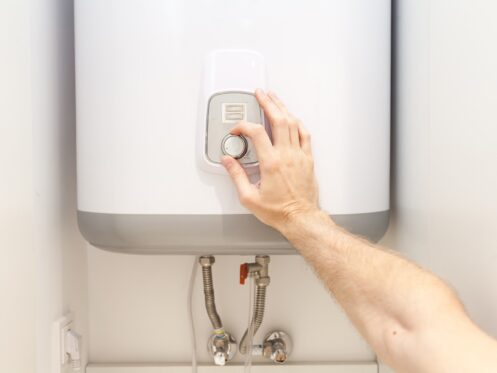
Maintaining a water heater includes checking and altering the temperature setting, which is both a simple and crucial task. Most homes are most comfortable with hot water at a temperature of 120°F or 49°C. This temperature tends to be just right: hot enough to kill bacteria but not so hot that it scalds or wastes too much energy. Homeowners should check the temperature setting at least twice a year to make sure it hasn’t been mistakenly changed or drifted.
To check the temperature, use a thermometer to test the water at the faucet furthest from the heater. To be sure you’re measuring the heater’s output accurately, let the water flow for a few minutes. Make the necessary adjustments to the water heater’s thermostat if the temperature deviates significantly from 120 °F. Gas water heaters typically include a dial on the valve that you can turn to adjust the temperature. Thermostats for electric water heaters are sometimes located behind plates that screw into the tank’s side.
Ensuring the right temperature is important for several reasons, including comfort, safety, and energy efficiency. You can save up to three to five percent on water heating expenses for every 10°F drop in water temperature. However, you need to keep the temperature around 120°F to prevent bacterial growth in the tank, so be careful not to set it too low.
Inspect for Leaks
Regularly checking the water heater for leaks is critical to its longevity and avoiding water damage. A water heater’s temperature and pressure relief valve, input/output connections, and tank are all potential sources of leaks. Neglecting even a little leak can cause major issues down the road, such as mold growth, floor damage, or even structural damage to your property.
Before you check the water heater itself for leaks, make sure the area surrounding it is dry and free of water stains. Check any exposed pipes and connections for signs of slow leaks, such as moisture or rust. Keep in mind that it is normal for the pressure relief valve to leak tiny amounts of water now and again. If there is a constant trickle or stream of water, you should check it out immediately.
You need to fix a leak as soon as you see it. Tightening fittings or changing washers is usually enough to fix small leaks from connections. However, if the water heater is leaking from the tank, it’s probably time to get a new one because internal rust has likely already damaged the tank. When dealing with a major leak, turn off the water supply to the heater and get a professional plumber’s opinion on what to do next.
Required Expert Maintenance
Scheduling annual maintenance for the water heater is key to maximizing how long it will last and how well it performs. An expert will perform several tasks during maintenance to keep the unit working efficiently and reliably.
Flush the Tank Annually
In regions with hard water, flushing the tank is critical for removing mineral deposits and silt that accumulate over time. An expert will disconnect the gas or electricity, seal the cold water intake, and attach a hose to the drain valve. This drainage process removes sediment. To loosen embedded deposits, the technician may randomly open and close the cold water intake. Once the water runs clear, the expert will refill the tank.
Check the Pressure Relief Valve
A crucial safety component is the temperature and pressure relief valve, sometimes known as a T&P valve. As part of routine maintenance, the technician will lift the lever on this valve to let water flow out. When released, the valve should seal securely. If it doesn’t, the expert will replace the valve.
Inspect the Anode Rod
The anode rod draws in any potentially harmful substances in the water to prevent tank corrosion. A specialist will replace the rod if corrosion reduces its thickness to less than half an inch or reveals the core wire. You might have to replace it more often if you live in a region with really hard water.
Insulate Hot Water Pipes
Although it’s not technically a water heater maintenance chore, insulating pipes that carry hot water can greatly decrease heat loss. If the technician finds that more insulation, such as fiberglass wrap or foam pipe sleeves, will help, they will install them or replace the old ones. In colder climates, proper insulation helps avoid freezing and saves energy by reducing the wait time for hot water.
Check the Expansion Tank
In homes with sealed plumbing systems, an expansion tank is necessary to handle the extra water that results from heating and expansion. Along with checking for leaks or corrosion, the expert will also measure the air pressure in the tank, which should be the same as the water pressure in the house. If the pressure is low, they will add more air. A flooded tank is a sign of a failed internal bladder that needs replacing.
Inspect the Venting System
Proper venting is essential for gas water heaters to function efficiently and safely. A professional will visually inspect the whole venting system for any signs of damage, corrosion, or obstructions. Their main concern will be ensuring that the vent pipe is properly angled and that all connections are tight. They’ll also make sure the draft hood is in good working order to pull combustion gases up the flue.
Test the Heating Elements
Usually, there are two heating elements in an electric water heater. As part of routine maintenance, a technician will use a multimeter to measure the resistance of each component and replace any that exhibit abnormally high or low readings. They will also inspect the thermostat and its functioning to guarantee precise regulation and the correct temperature setting, usually around 120°F, for maximum efficiency and safety.
Keep Your Water Heater Healthy: Maintenance Checklist
Water heaters are often “out of sight, out of mind,” but a bit of routine care can extend their life and improve performance. Here’s a basic maintenance checklist for traditional tank-style water heaters (gas or electric):
- Test the T&P Valve Annually: The temperature and pressure relief valve is a critical safety feature. Carefully lift the lever on the T&P valve (usually on the top or side of the tank) briefly and then let it snap back. You should hear a gush of water into the discharge tube. If it doesn’t release water or won’t reseal (it keeps dripping), it may need replacement. This ensures your tank won’t overpressurize.
- Flush the Tank: Sediment, such as calcium and mineral deposits, builds up at the bottom of the tank over time, especially if you have hard water. At least once a year – more if you notice popping or rumbling sounds – drain a few gallons from the tank. Ideally, drain it completely until water runs clear. Attach a garden hose to the drain valve at the bottom, run the hose to a floor drain or bucket, and carefully open the valve. Be cautious: the water is hot! Flushing prolongs the tank’s life and keeps it heating efficiently.
- Inspect the Anode Rod (Every 2–3 Years): The sacrificial anode rod inside your water heater tank attracts corrosion to help protect the tank walls. Over time, it gets “eaten up.” Every few years, have a plumber pull the anode rod (it’s typically accessible at the top of the unit). If it’s heavily corroded or less than 1/2 inch thick, consider replacing it. It’s a low-cost part that can greatly extend your tank’s lifespan by preventing rust.
- Check for Leaks and Insulate: Look over the tank and plumbing connections for any signs of leaks or rust. Catching a small leak early can save you from a big headache later. If the water heater is in a cold basement, you might also wrap the incoming and outgoing pipes with foam insulation to reduce heat loss (and prevent “sweating” in summer). You can even insulate the tank with a water heater blanket if it’s an older model with minimal internal insulation.
- Professional Tune-Up: Every year or two, it’s wise to have a professional check your water heater. They can clean the burner assembly on gas units, ensure proper venting, test the thermostat and gas valve, and flush the unit if needed. This type of service keeps the heater running safely and efficiently. For tankless models, professional descaling is recommended annually due to their small passageways.
Regular maintenance not only prevents cold shower surprises but also keeps your water heater running at peak efficiency – saving energy and money. A little TLC for your water heater goes a long way towards ensuring reliable hot water for years to come.
How to Find a Reliable Plumber
Choosing a trustworthy plumber is a big job. To begin, see if anyone you know who has had good experiences can provide a suggestion. You should check the plumber’s insurance and license to make sure they are up to code in your area. You should also verify their credibility by looking into their standing with agencies like the BBB and reading reviews posted online. Finally, to locate the greatest fit for your needs, get different quotations and compare the services offered.
Now that you know how to properly maintain your water heater, it’s time to schedule a maintenance visit. Southport Home Services also helps Madison, WI homeowners with a full range of plumbing services such as water treatment, bathroom remodels, sump pump installations, and so much more. Give us a call now to schedule water heater maintenance for your home.